Performance Leaves Us Hungry

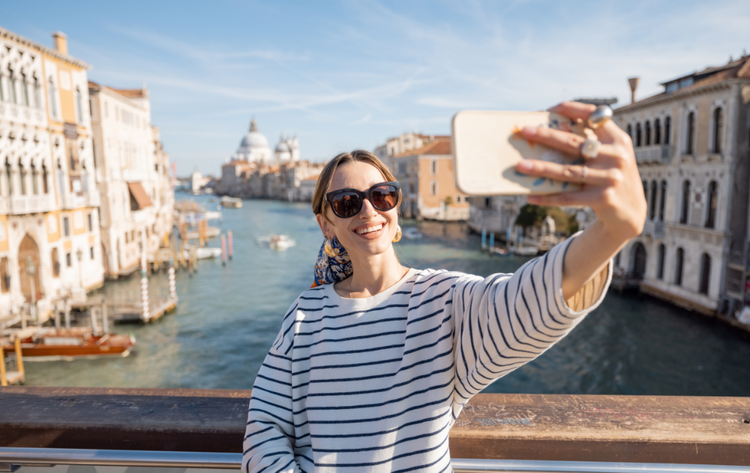
The loneliest I have ever been, I was also the most visible.
I was posting. I was sharing. I was building something — or trying to. A career from a story, a platform from a belief system, a community from an algorithm. I was shouting into the internet about things I genuinely cared about, trying to help people, trying to matter in the way that American culture tells you mattering is supposed to look like: reach, engagement, followers, impact you can measure in a dashboard. And I was desperately, profoundly alone.
That was not a coincidence. That was a feature of the system.
Idaho
There is a particular exhaustion that comes not from doing too much but from performing too much. They feel similar from the inside. The depletion, the sense of running on nothing, but they have different sources. Doing too much is a logistics problem. Performing too much is an identity problem. You have spent so long curating the version of yourself that exists for an audience that you have lost access to the version that doesn't.
I was exhausted in Idaho in that second way. Everything I experienced had to be curated for expression, for documentation, for usefulness to someone else. Grief became a post. Conviction became a campaign. Even joy had to be paused while some part of me figured out how to frame it. I was not really living my life. I was producing it.
And I had very few reliable connections. I had Carter, but I had no meaningful community. I tried to build it; potlucks, gatherings, the ordinary infrastructure of neighborhood life, but people were unavailable. Not because they were unkind. Because that muscle had atrophied. American friendliness is real and warm and entirely compatible with not showing up. I didn't understand that yet. I just knew I was exhausted and alone and performing for an audience that could not hold me.
The Performance and Its Blindness
The rest of the world sees Americans clearly. We do not see ourselves at all.
This is not a comfortable thing to say and I don't say it with contempt. Americans are among the warmest, most genuinely friendly people I have encountered anywhere. The openness is real. The enthusiasm is real. The desire to connect is real. But warmth and genuine community are not the same thing, and America has confused them for so long that most Americans no longer know the difference. We are friendly the way a storefront is welcoming. The warmth is immediate, sincere, and does not require anything of either party afterward.
The result is a country that is simultaneously among the most outwardly warm and among the most violent and lonely on earth. These are not contradictions. They are the same condition expressed in different registers. When genuine community erodes, when the structures that create real belonging, obligation, and mutual witness disappear, what fills that vacuum is performance. Performed warmth. Performed happiness. Performed hardship. Performed conviction. The feeling becomes secondary to its expression, and eventually the expression becomes the thing itself. People forget how to feel it.
Social media did not create this. It perfected it. It gave the performance an audience, metrics, and a feedback loop that genuine community could never compete with. A potluck that nobody comes to leaves you with nothing but a few pictures of pretty food. A post about community leaves you with likes.
What I find staggering was a conversation I had recently with a friend here in Romania. She told me, earnestly and without irony, that Americans were saving homesteading culture globally. That by making it cool on social media, Americans were inspiring the rest of the world to return to land, food, and seasonal rhythms. She meant it as a compliment.
I was stunned at what I was hearing. That a culture which largely severed its connection to land and food production generations ago, through industrialization, suburbanization, the deliberate dismantling of agrarian life, was now being credited with saving that knowledge for cultures that never lost it. That the performance of a thing was being mistaken, by an intelligent and thoughtful person, for the thing itself. That American visibility had become so total, so confident, so culturally dominant, that even its simulations were being received as instruction.
This is the blindness. Not malice. Not stupidity. A culture so fluent in its own performance that it can no longer distinguish between doing something and being seen doing something. And so assured of its own influence that it cannot imagine the view from outside.
I had lived inside that blindness. I knew exactly what it felt like. I also know now, what it feels like to step out of it.
Pennsylvania
We moved to Pennsylvania and I stopped. Not deliberately, not as a practice or a philosophy. I just stopped.
I stopped posting. I stopped performing. I started paying attention. To my neighbors. To the ongoing neighborhood drama about the feral cats that everyone had opinions about and nobody agreed on. To the way the seasons moved through the trees I was beginning to know by name. To the creak of my old floors. To my books. To the particular quality of being surrounded by things that did not require anything of me except presence.
I probably didn't take enough pictures.
It was the best chapter of my life because it felt like home. Not performed home, not the aestheticized version with the linen and the sourdough and the ring light, but the real thing. Creaky and ordinary and entirely mine.
For two years I lived like that. Carter and I, and neighbors who showed up, and a community that built itself quietly out of ordinary proximity and genuine attention. Nobody was performing it. Nobody was making it cool. It simply was.
And then America made it impossible to stay.
The division had been building for years but it became something disturbing. It became something that felt less like disagreement and more like danger. The election confirmed what we had been feeling. We loved Pennsylvania. We did not want to leave. We left anyway.
Romania
Romanians can be petty. They can be attached to their image, their reputation, their standing among neighbors. I am not describing a perfect culture or a simple one. I am describing what I observe as an outsider, which is this: I do not sense loneliness here.
People enjoy each other's company. Regularly, unremarkably, without organizing it into an event or documenting it for an audience. Community is not something they are trying to build or save or prove. It is simply the condition of their lives. The idea of performing it, posting about it, making it visible to strangers in order to establish that it exists, would be, I think, genuinely foreign to them. Not because they are more virtuous but because to them it is unremarkable.
Nobody here posts about their chickens. All of their neighbors have chickens. That observation sounds small and it is not. The things that are ordinary here are the things Americans are desperately trying to prove to the world they have. The homestead. The seasonal rhythms. The preserved food and the kitchen garden and the community gathered around a table. Here these things require no commentary. They are unworthy of documentation precisely because everyone has them. They exist whether or not anyone is watching.
I have been here long enough now to feel the difference. The reticence I developed in Pennsylvania, the quiet decision not to perform my life for an audience, does not feel like deprivation here. It feels like the most natural thing in the world. Like I have simply stopped announcing that I am breathing.
What I Am Still Unraveling
I did not come to Romania to find myself. I came because America was becoming a place we could not stay in, and because an opportunity opened, and because we took it. What I found here was not revelation. It was clarity.
I see America more clearly from here than I ever could from inside it. I see its warmth and mean it. I see its violence and mean that too. I see a culture so fluent in the performance of values that it has mistaken the performance for the values themselves. I see people posting about their chickens in a country where nobody has chickens anymore, and believing, genuinely believing, that this is a contribution to the world. That visibility is the same as doing. That reach is the same as roots.
It is a tragic thing to watch. I say that with grief, not contempt. These are my people. This is my context. I am made of the same culture I am describing, and the work of seeing it clearly is also the work of seeing myself. It is what I absorbed, what I performed, what I mistook for real.
I am still unraveling it. I am still recovering from it. I do not know what I will do with what I have learned, just that I am watching and learning.
What I know is this: I am not going back to performing my life. Not because I am cured of the impulse but because I have now lived long enough without it to know what it costs. The loneliness in Idaho was not incidental. It was the price. And I have seen, in Pennsylvania and in Bran, what you get to have instead.
It is ordinary. It is unworthy of documentation.
It is enough.
And it is delicious.
Sources and Further Reading
Goffman, Erving. The Presentation of Self in Everyday Life. Anchor Books, 1959.
Murthy, Vivek H. Together: The Healing Power of Human Connection in a Sometimes Lonely World. Harper Wave, 2020.
Putnam, Robert D. Bowling Alone: The Collapse and Revival of American Community. Simon & Schuster, 2000.
Tocqueville, Alexis de. Democracy in America. Translated by Harvey C. Mansfield and Delba Winthrop, University of Chicago Press, 2000. (Original work published 1835–1840.)
Turkle, Sherry. Alone Together: Why We Expect More from Technology and Less from Each Other. Basic Books, 2011.
Turkle, Sherry. Reclaiming Conversation: The Power of Talk in a Digital Age. Penguin Press, 2015.



Comments