Just Choose the Country Life


Somewhere on your feed right now, someone is posting a photograph of a windowsill. There is morning light. There is a ceramic mug. There may be a linen curtain, or a garden glimpsed through old glass, or a book left open at a significant page. The caption reads something like: I discovered this is all I need. Or: staying home and being satisfied is a quiet revolution. Or: I finally chose the simple life.
That word, chose, is doing enormous work. It is converting a question of material access into a question of personal enlightenment. It is suggesting that the peaceful, unrushed life of the countryside, the kitchen garden, the book by the fire, is available to anyone willing to want it. It is implying that the millions of people who do not have this life simply haven't made the right choice. They are too attached to ambition. Too addicted to speed. Too seduced by the consumer culture that the simple-lifer has heroically transcended.
This is not a new fantasy. It is not even a creative one. The pastoral ideal is the idea that rural simplicity is the highest good and that those who choose it have seen through the corruption of modern life. This fantasy has been with us for over two thousand years. And in every version, it has meant exactly the same thing: a luxury produced by people with enough economic security to romanticize what everyone else was doing just to survive.
The Long History of Pastoral Fantasy as Class Artifact
The Roman poet Horace's Beatus ille, "happy the man," who has withdrawn from the city to his country estate, is often cited as the first great articulation of the pastoral ideal in Western literature. What is less often noted is that Horace wrote it from his Sabine farm, a property gifted to him by his wealthy patron Maecenas. The otium he celebrated was the philosophical leisure of the gentleman farmer and the productive idleness of the cultivated mind at rest. This was explicitly contrasted not with city life, but with the toil of people who had to work for a living. The simple life was always the life of someone who had already solved the problem of survival.
The pastoral tradition continued through the Middle Ages largely as aristocratic entertainment: the idealized shepherd life performed at court, before flowering again in the English Romantic period. Wordsworth wandered lonely as a cloud through a countryside that was, at the precise moment of his wandering, being transformed by enclosure acts that stripped common land from the rural poor and handed it to landed gentry. The peasants being dispossessed of their grazing rights and kitchen gardens did not write odes to nature. Wordsworth did. The poets who produced England's most enduring literature of pastoral simplicity wrote it as the actual simple life of actual rural people was being systematically dismantled by the class that could afford to miss it.
The American tradition has its own founding myth of willed simplicity. Henry David Thoreau went to Walden Pond in 1845 to live deliberately, to front only the essential facts of life. His cabin was built on land owned by Ralph Waldo Emerson. His mother and sisters brought him food and did his laundry. He walked to town regularly. The experiment in self-sufficiency lasted two years, two months, and two days, after which Thoreau returned to Concord and eventually to his family's pencil business. Walden remains one of the most influential documents of American simple-living philosophy, written by a man who was, at best, a weekend practitioner of the life he described.
The Arts and Crafts movement of the late nineteenth and early twentieth centuries completed the circle between pastoral fantasy and class identity. William Morris and his contemporaries, reacting against industrial capitalism, promoted hand-craft, rural simplicity, and the beauty of honest labor. The objects they produced were handwoven textiles, hand-thrown pottery, hand-printed books. They were priced entirely out of reach of the working-class people whose traditional labor they romanticized. The movement's greatest achievement was making the aesthetics of peasant life into luxury goods for the bourgeoisie. It was, one might say, the original cottagecore.
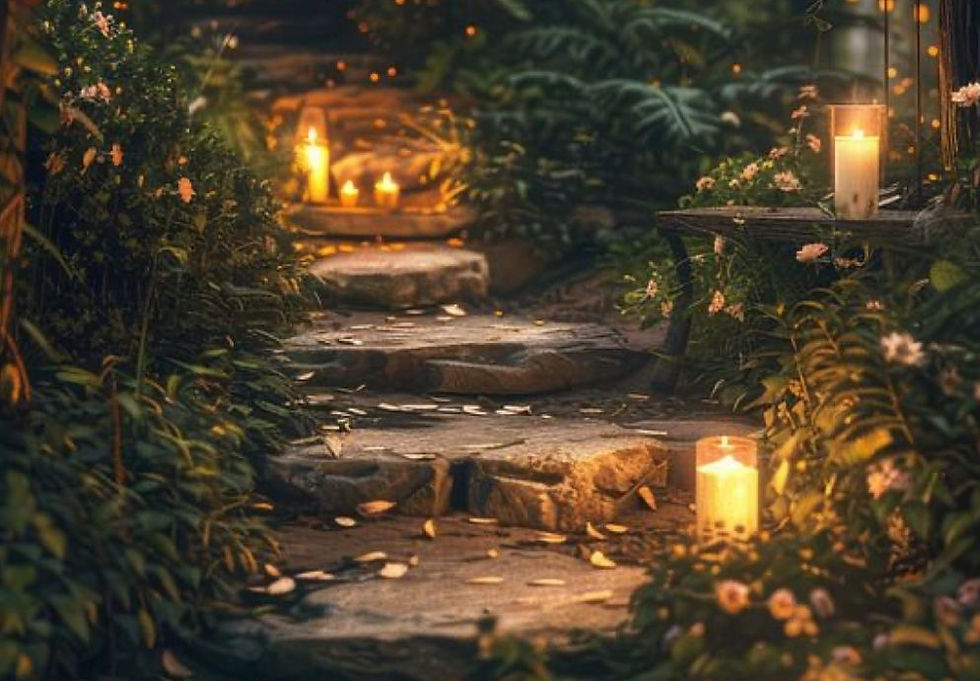
And cottagecore is precisely where we have arrived. The aesthetic that swept social media in the early 2020s that showcases the foraging, the sourdough, the linen, the wildflowers in clay pots. It is the Arts and Crafts movement with a ring light. It is the pastoral ideal in its digital iteration, and it carries the same genetic material it has always carried: the material conditions of the person performing simplicity are invisible, while the simplicity itself is presented as a moral achievement.
How Class Becomes Aesthetic
The specific mechanism by which social media launders class as lifestyle choice is worth examining, because it is more sophisticated than simple dishonesty. No one posting their quiet morning is lying about their morning. The erasure happens through what the frame excludes.
A photograph of a windowsill with morning light does not show the mortgage, or the inheritance, or the partner's income, or the remote job that pays city wages for countryside hours, or the decade of financial accumulation that made the countryside house possible. It shows a mug and some light. The material conditions that produce the mug and the light are not part of the image and are not required to be. What remains is pure mood. And mood, unlike property, is available to everyone.
This is the conversion at the heart of the slow-living aesthetic. It is a set of economic outcomes is repackaged as a set of personal values. And once the conversion is complete, the guilt mechanism activates almost automatically. If the peaceful life is a choice, it is therefore a question of values, priorities and a willingness to opt out of hustle culture. The person who does not have it, then, chose wrong. They are too ambitious. Too materialistic. Too unwilling to let go. The structural conditions that make the peaceful life inaccessible to most people disappear entirely, replaced by a moral failure located in the individual. Housing costs are not mentioned. Stagnant wages are not mentioned. The absence of social safety nets that might make risk-taking possible is not mentioned. What is mentioned is intention. Mindset. The courage to choose differently.
The political consequences of this conversion are significant. An economic crisis, a generation priced out of stable housing and unable to accumulate the security that makes a slower life possible, becomes, in the language of slow-living content, a lifestyle preference. The correct response to a political problem becomes a personal one: want differently. Opt out. Just choose the simple life. The structural conditions that produced the problem are not addressed, because they are not visible. They have been conveniently aestheticized out of the frame.
The Myth of the Countercultural Refuser
There is another layer to this that deserves its own examination, because it is peculiarly American in character and particularly dishonest.
The slow-living practitioner does not merely claim to have chosen the simple life. They claim to have refused excess. The framing is explicitly countercultural: most people, they imply, want the fast lane, the status symbols, the career ladder, the expensive urban life, and relentless optimization. The simple-lifer has seen through all of that. They have made the harder, braver, more enlightened choice to step away. This framing requires the assumption that most people, given the choice, would choose the hustle. It claims that the desire for a peaceful life with enough time, a stable home, connection to seasons and community, is a minority taste requiring special discernment.
This is not a serious claim. It has never been. The desire for security, rest, and rootedness is among the most universal human desires that has ever been documented. Across cultures and centuries, what people have consistently said they want, when they have been asked, is some version of: enough, a place to belong, time with people they love, meaningful work that does not consume them. The peaceful life is not a countercultural insight. It is the default human aspiration. What is unusual and historically aberrant, in fact, is the set of economic conditions that have made it inaccessible to so many people while remaining available to a few.
The "refusal" narrative, then, accomplishes something important: it takes a universal desire and reframes it as a superior moral achievement. It takes something most people want and converts it into something only the discerning few have been brave enough to choose. The person posting the windowsill photograph is not a refuser of luxury. They are someone who was able to afford what most people want, and who has constructed a story in which that affordability looks like moral enlightenment.
There is a class signal embedded in the refusal narrative that is worth naming. You can only meaningfully refuse what was offered to you. The performance of opting out of the fast-paced, high-earning, urban life requires that you had access to that life, or could credibly have had it. The choice to step away from the career ladder implies you were on the ladder. The decision to leave the city implies you could afford the city. The refusal is itself evidence of the privilege it claims to transcend.
For the majority of people who never had access to the hustle-and-achievement treadmill in the first place, there is nothing to refuse. There is only the gap between what they want and what they can afford. The slow-living aesthetic has no language for this gap, because acknowledging it would require acknowledging that the simple life is not, in fact, a moral choice.
What the Fantasy Erases
I have been living for a few months with a family in Bran, in the Carpathian foothills of Romania. The house is comfortable and modern. The family works hard, but they also rest, socialize, and have time for pleasure in their lives. There is balance here. And it isn't any kind of performance.
The garden produces food and the seasons shape the household's rhythms. The work gets done, and then people sit together and eat and laugh and talk. The family takes pride in what they have built which is a stable, middle-class country life. It is a good life by any measure.
It looks nothing like the cottagecore content online because it is ordinary. It does not photograph as aspiration or morally superior. The rest looks like rest, not like a linen-draped table. The food looks like dinner, not like a styled spread. The pride the family takes in their home is the pride of people who built a functional home, not the pride of someone who made an enlightened choice superior to everyone else. Let's be honest. The slow-living content machine doesn't want the actual country life. It wants the mood, an isolated frame, with the ordinariness removed.
What's honest is that this dream has become inaccessible for most Americans. and that deserves to be said without shaming and moral superiority.
The View From Outside
I am surrounded, daily, by the thing being sold as an aspiration. And I, too, am not yet able to have it.
The possibility is there to purchase land in the future. If that happens, what comes next is likely years of work, savings, and the labor of building something on it. There is no guarantee. There is only the belief that sustained labor will eventually produce the simple dream life I crave. This is the choice I know many people would like to make, and which the slow-living aesthetic treats as though it were simply a matter of wanting correctly.
This is what the caption I chose the simple life dishonestly erases. Most people do want a simple life with peace and stability. But the windowsill comes at the end of something much more than a choice. It is the outcome of time, resources, and stability, accumulated or inherited. Calling it a choice is not just inaccurate. It deflects an appropriate economic question into a moral question about courage and values.
The simple life is not out of style. Nobody is choosing 60 working hours over peace. What has changed is the set of conditions under which peace and stability is achievable. Those conditions are political and economic, not aesthetic. They will not be addressed by better simple living performance. They will be addressed, if at all, by the unglamorous work of people who can see the common desire for stability instead of shaming those who do not have it.
Sources and Further Reading
Horace. Epodes. Translated by Niall Rudd. Cambridge: Harvard University Press (Loeb Classical Library), 2004.
Veblen, Thorstein. The Theory of the Leisure Class: An Economic Study of Institutions. New York: Macmillan, 1899.
Williams, Raymond. The Country and the City. London: Chatto and Windus, 1973.
Marx, Leo. The Machine in the Garden: Technology and the Pastoral Ideal in America. New York: Oxford University Press, 1964.
Boris, Eileen. Art and Labor: Ruskin, Morris, and the Craftsman Ideal in America. Philadelphia: Temple University Press, 1986.
Slotkin, Richard. Gunfighter Nation: The Myth of the Frontier in Twentieth-Century America. New York: Atheneum, 1992.
Walls, Laura Dassow. Henry David Thoreau: A Life. Chicago: University of Chicago Press, 2017.
Cederström, Carl, and André Spicer. The Wellness Syndrome. Cambridge: Polity Press, 2015.
Desmond, Matthew. Poverty, by America. New York: Crown, 2023.
Eurostat. "Housing in Europe — 2024 Edition." European Commission, 2024. Accessed May 2026. https://ec.europa.eu/eurostat/web/interactive-publications/housing-2024.


Comments