Why Romania Made Sense

Updated: Sep 27

People often ask why I chose Romania, and I always have trouble giving a short answer because there wasn’t one reason. It was the result of a lot of research into what actually makes a country livable: safety, political stability, cost of living, healthcare, immigration, infrastructure, and the realities of daily life. But I was also looking for somewhere I could imagine genuinely enjoying my life. I cared about landscape, seasons, history, culture, community, and whether I thought I would still be curious about the place ten years later.
I couldn’t really afford to get this decision wrong. I’ve never been financially wealthy, and moving across the world was already a significant investment. I didn’t have the resources to move to Romania, discover it was completely unsustainable, and simply start over in another country. So while there was certainly intuition involved, I spent a tremendous amount of time studying the facts of the place I was considering and the quality of life I was signing up for.
A Landscape That Felt Like Home
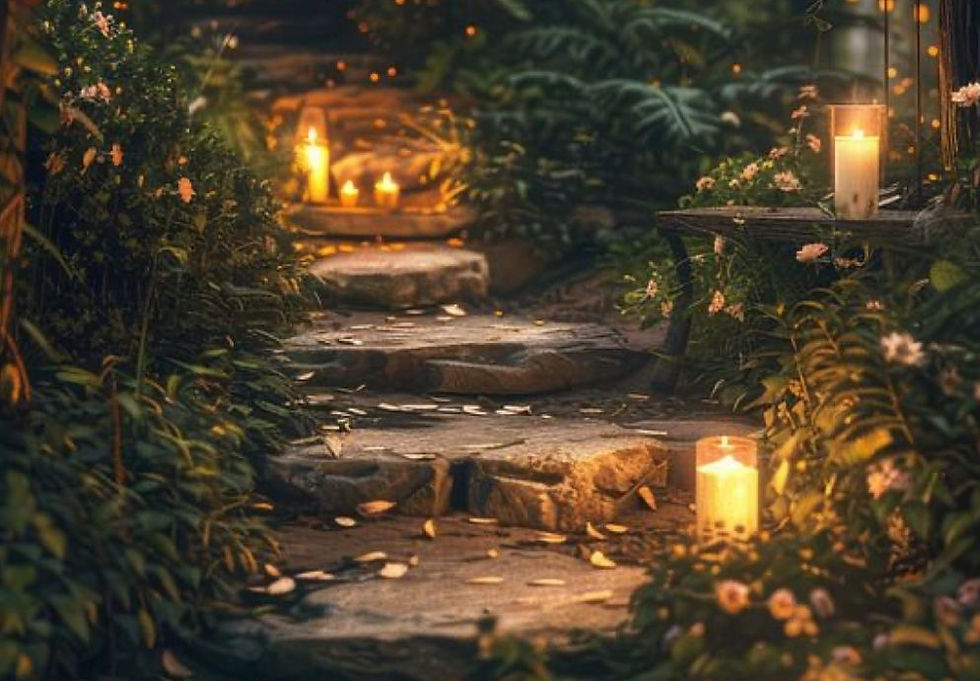
The Carpathians were one of my first points of intrigue because I have never felt more at home anywhere than I did in the Appalachians of Pennsylvania. There was something about that landscape that fit me: old forested mountains, dense green summers, dramatic autumns, cold winters, and the way nature was always pushing its way into ordinary life. It was comforting to discover how much of that I could also find in Romania.
I knew I needed four seasons. I didn’t want endless sunshine and pleasant weather. I wanted autumn color, snow, summer storms, mud, and spring arriving almost violently with everything suddenly growing and flowering at once. I like aggressive nature. I like living somewhere the natural world refuses to become background scenery. The Carpathians offered that same sense of being surrounded by something wild, but they are also a lived landscape of villages, gardens, animals, hayfields, orchards, woodpiles, and forests beginning at the edges of the ordinary. I wasn’t just looking for beautiful scenery. I wanted a relationship with the rhthym of the landscape around me.
History I Could Keep Exploring
Romania’s history only deepened my interest. Transylvania’s medieval Saxon towns, fortified churches, walls, towers, cemeteries, and old houses immediately spoke to my historian’s heart. What I especially love is that these aren’t simply ruins or carefully reconstructed heritage experiences. People still shop, work, raise families, drink coffee, hold festivals, and go about life inside places shaped hundreds of years ago. History isn’t tucked away somewhere separate from everyday life. People are still living in it.
The Saxon history initially fascinated me, but it quickly became apparent that this was only one layer of a much more complicated region. Romanian, Hungarian, Székely, Saxon, Roma, Jewish, Ottoman, Habsburg, communist, and other histories overlap here. Borders changed, populations moved, languages and religions met, and communities adapted around one another in ways that were sometimes cooperative and sometimes painful. As someone endlessly curious about how people move, settle, believe, remember, and create home, I could spend the rest of my life studying this region and never feel finished.
Political Stability and the Trajectory
Politics were one of the areas where I became almost obsessive about research. I spent a great deal of time with democracy indexes, comparative political data, and researchers studying democratic decline and instability. Barbara F. Walter’s work was particularly influential because it pushed me beyond simply asking whether a country was technically democratic and toward questions about factionalism, institutional erosion, political violence, and what happens when the mechanisms that normally absorb conflict begin to weaken.
Romania and the United States were sitting surprisingly close together on major measures of political rights and civil liberties. Freedom House scored Romania at 83 out of 100 and the United States at 84 in its 2025 reports, classifying both as “Free.” But watching the evolution of those numbers told very different stories. Romania had been sitting at roughly that level for years, gradually improving, while the United States had experienced a substantial and rapid decline. Freedom House had previously scored the United States at 94, and by 2025 it was describing an 11-point decline over 13 years.
V-Dem’s data made the trajectory even more grim. Its democracy measures showed a substantial long-term deterioration in the United States, particularly in measures related to democracy and the institutional constraints that prevent political power from becoming concentrated. The United States had once ranked among the world’s stronger liberal democracies, but when I was making this decision, V-Dem was documenting a clear downward trajectory. Romania’s democracy remained imperfect, but its record was considerably more stable.
That distinction really stood out to me. Romania certainly has problems with corruption, political influence, distrust of institutions, and pressure on independent media. I knew I wasn't moving to a politically perfect country. But risk isn’t only about where a country stands today. Speed and direction matter too. And I knew how much my own country was shifting rapidly.
Romania’s membership in the European Union added another consideration. EU membership obviously doesn’t make a country immune to corruption, extremism, institutional failure, or democratic backsliding, but it does place national institutions within a larger legal and political framework. None of this allowed me to predict what would happen in either Romania or the United States. I was trying to make the best decision I could with measurable information rather than assuming that the country I already knew was necessarily the safer long-term choice.
Safety Matters
Safety was another area where I looked at the numbers before trusting impressions. The homicide rate in the United States was around 5 per 100,000 people, while Romania’s had been around 1 or below in recent years. I also looked at violent crime, firearm deaths, and broader international safety measures because I wanted to understand the baseline risk environment rather than rely on anecdotes about whether somewhere “felt safe.”
After living here for a few months, those numbers have become much more tangible. I walk far more than I did in the United States, including at night. I take buses and ride-shares and wander around cities without organizing myself around the level of vigilance I once considered normal. Romania isn’t free from crime or harassment, and my experience isn’t universal, but I have personally felt remarkably safe here.
Feeling safe changes the way you experience a place. You linger. You explore. You notice the buildings and flowers and people sitting on benches instead of constantly scanning what is happening around you. Your world gets larger because you aren’t always calculating which which areas to avoid. I hadn’t fully appreciated how much energy vigilance consumed until I experienced life with a little less of it.
Economics and Budgets
I’ve never been financially wealthy, so living frugally has always been necessary. Naturally, economics were a major part of choosing where to go. I wasn’t interested in the claim that Romania was “cheap.” I wanted to know what our money would actually buy and whether we could sustain my life here without constantly being one problem away from financial disaster.
The broader data supported what I was finding when I compared actual expenses. In 2024, Romania’s overall household consumer prices were about 64 percent of the EU average, among the lowest in the European Union. Food and non-alcoholic beverages were about 76 percent of the EU average, while restaurants and hotels were around 69 percent. Housing was dramatically more accessible than what I was accustomed to in the United States, public transportation was inexpensive, and private medical care and medications could often be paid for out of pocket without becoming enormous financial events.
What mattered most wasn’t finding the absolute cheapest country. It was the potential margin left after ordinary life was paid for. I wanted enough room for education, travel, good food, cultural life, creative work, unexpected expenses, and perhaps eventually even land. I still have to budget and make choices, but I wanted a full life within my means rather than simply a cheap one. Because I knew I probably wouldn’t have the money for another international restart, that distinction mattered enormously.
The Practicality of Residency
Immigration was another practical filter because there was no point choosing a country where staying long term would be prohibitively difficult. Romania stood out because the barriers were relatively low for us. As U.S. citizens, we could enter for a short stay without applying for a visa in advance and then apply through the Romanian immigration system for residency. We also didn’t need European ancestry, an employer willing to sponsor us, or an enormous investment.
Starting a Romanian company was relatively accessible, which gave us a realistic route based on economic activity rather than wealth or family connections. There was paperwork, proof of income and housing, insurance, and plenty of bureaucracy, but the basic threshold for establishing ourselves legally was something we could actually meet. I wasn’t looking for a country with no bureaucracy. I was looking for one where people in our circumstances had a plausible path to staying.
What the Numbers Couldn’t Tell Me
There were also things no spreadsheet or international index could really answer. I needed to know whether I would actually like living here. A country could perform beautifully against every criterion I had created and still be somewhere I didn’t want to wake up every morning.
A few months in, I know much more about that than I did when I was researching from the United States. The Romanian language is difficult and I am still very much learning, but people have generally been gracious when I try. Locals get excited when I use my handful of Romanian words and phrases. There are established expat communities when I need people who understand the particular weirdness of starting over in another country, but I also have opportunities to build relationships outside of them.
Then there are all the ordinary things that are difficult to quantify: walking through an old town to buy groceries, mountains appearing at the end of a street, people sitting outside talking long after dark, seasonal festivals, markets, forests, old buildings, and the feeling that there is always another village or story or strange bit of folklore I haven’t discovered yet. Those things weren’t substitutes for the practical research. They were the other half of the decision. I wanted a country that made sense on paper, but I also wanted to be interested in the life I would actually have there.
Why Romania?
In the end, no single category decided it. Romania kept meeting enough of the things that mattered to me at the same time. The Carpathians felt reassuringly like the Appalachians I already loved. The history gave me more than I could ever exhaust. The political research gave me enough stability to trust the future wasn't frivolous. The safety data were compelling, and my first months here have reinforced them. The economics gave me more room to build a full life within my means, and the immigration system offered a legal pathway that was realistically accessible to us.
That is also why I don’t think there is a universally “best” country to move to. Someone else could study the exact same data and reasonably decide that Romania doesn’t fit them at all. The important part is knowing what matters to you and then interrogating a place carefully enough to find out whether it can support those things. Look at politics, safety, healthcare, money, taxes, legal status, transportation, and what happens when something goes wrong. But also ask what kind of landscape makes you feel alive, what you want an ordinary Tuesday to look like, what level of uncertainty you can tolerate, and whether you can imagine remaining curious about the place once the novelty wears off.
That was ultimately what all of my research was trying to answer. I wasn’t looking for a perfect country. I was trying to choose the ground for my new home carefully.
Sources and Further Reading:
European Commission. 2025 Rule of Law Report: Country Chapter on the Rule of Law Situation in Romania. Brussels: European Commission, 2025.
Eurostat. “Comparative Price Levels of Consumer Goods and Services.” Luxembourg: European Commission, 2025. Data for 2024.
Freedom House. Freedom in the World 2025: Romania. Washington, DC: Freedom House, 2025.
Freedom House. Freedom in the World 2025: United States. Washington, DC: Freedom House, 2025.
Inspectoratul General pentru Imigrări. “Economic Activities.” Ministry of Internal Affairs, Romania. Accessed 2025.
Inspectoratul General pentru Imigrări. “Professional Activities.” Ministry of Internal Affairs, Romania. Accessed 2025.
United Nations Office on Drugs and Crime. “DataUNODC: Intentional Homicide.” United Nations Office on Drugs and Crime. Accessed 2025.
V-Dem Institute. Democracy Report 2025: 25 Years of Autocratization—Democracy Trumped? Gothenburg: University of Gothenburg, 2025.
Walter, Barbara F. How Civil Wars Start: And How to Stop Them. New York: Crown, 2022.
World Bank. “Intentional Homicides (per 100,000 People)—Romania.” World Development Indicators. Accessed 2025.
Federal Bureau of Investigation. Crime in the United States, 2024. Washington, DC: U.S. Department of Justice, 2025.


Comments